
I spent over 15 years working as a professional 3D animator and graphic designer. Recently, I discovered the fascinating world of growing mushrooms after years of cultivating vegetables. This is a completely new field for me, and I find it incredibly exciting. Fungi are neither animals nor plants, but somehow they share characteristics with both.
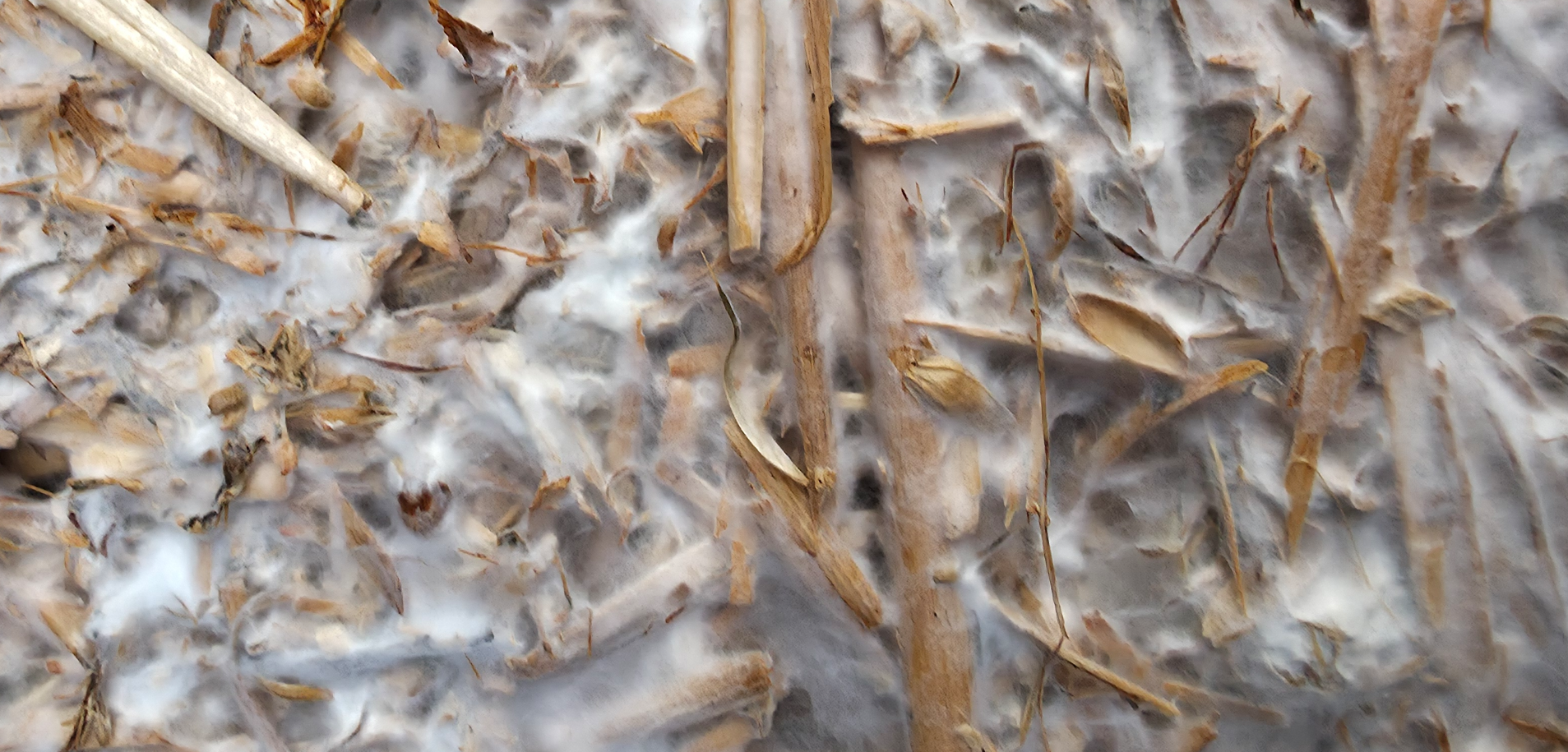
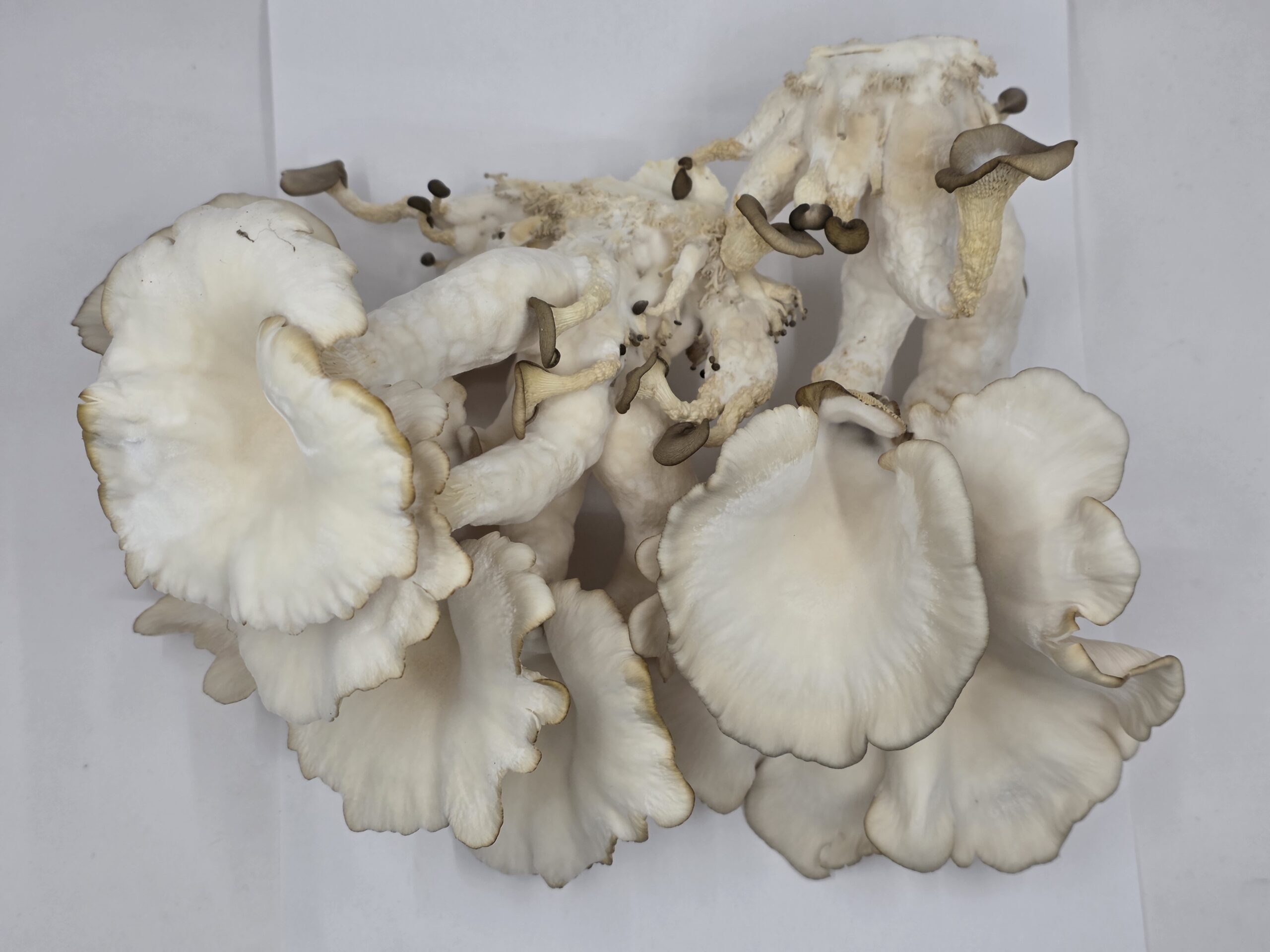
What I find fascinating about mycelium is that you can always, in a certain way, work with whatever materials are already available around you. When you’re out in the countryside, you might have plenty of wood or different kinds of substrate. But for me, the challenge is to use whatever my surroundings have to offer.
In my case, we have a little store in the heart of Munich. We have a basement that is a little too humid because there’s a small leaking water pipe in the corner, and it’s pretty cold down there. We also drink a lot of coffee, and, like everyone else, we sometimes order things by mail that arrive in cardboard boxes. And as part of our healthy diet, we eat eggs that come packed in cardboard egg cartons.
When you combine all of this, you get pretty much the perfect conditions for cultivating oyster mushrooms. You can grow the mycelium on coffee grounds that have been sterilized—or, more simply, pasteurized with hot water—and rehydrated cardboard from egg cartons or post poxes.
Basically, you just mix the coffee grounds and the cardboard together and pour boiling water over them. Then you let it cool down and add the mycelium. Once it has fully colonized the substrate, the growing phase takes place in the office, stored away on a dark shelf or in a wardrobe.
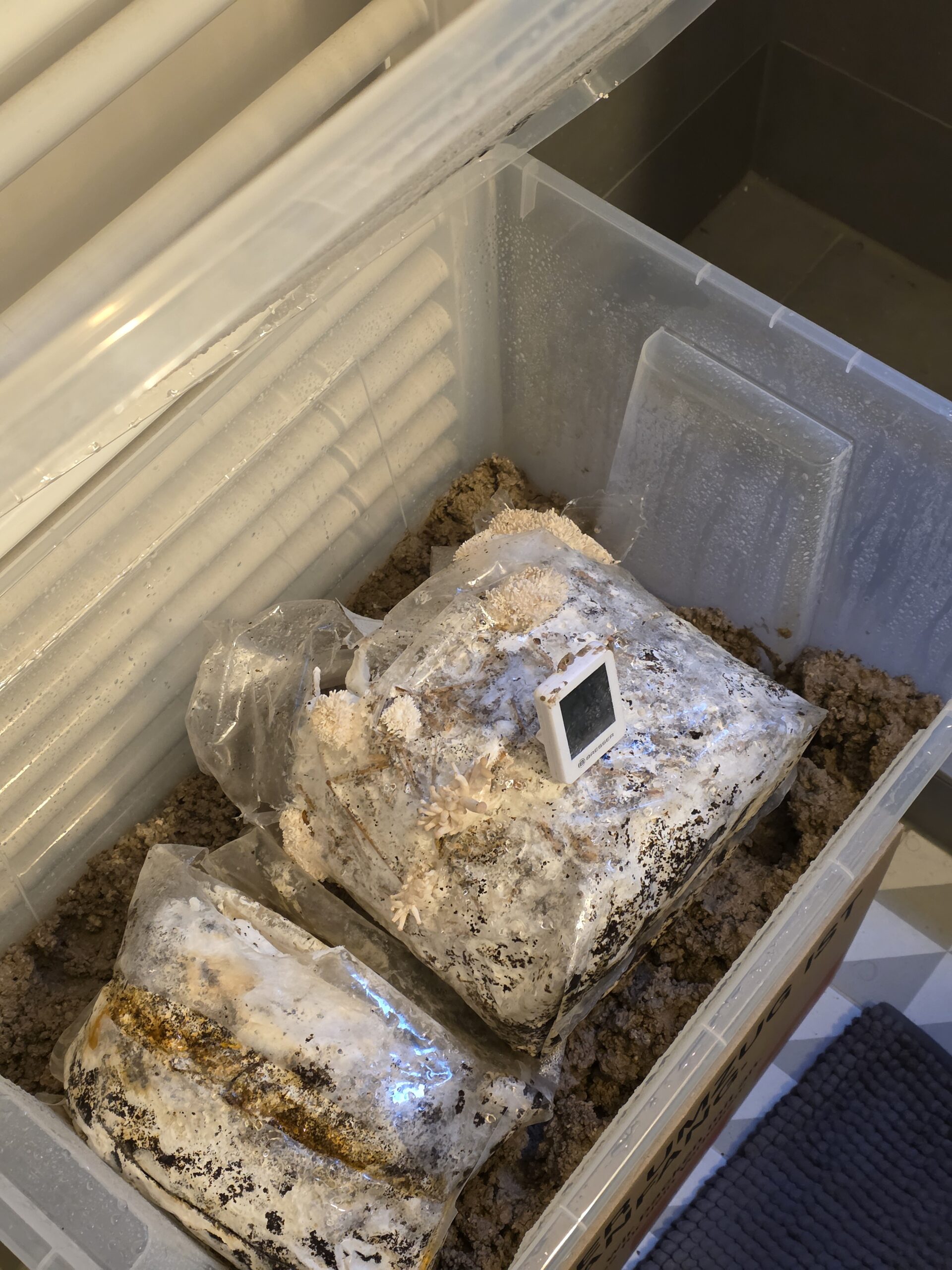
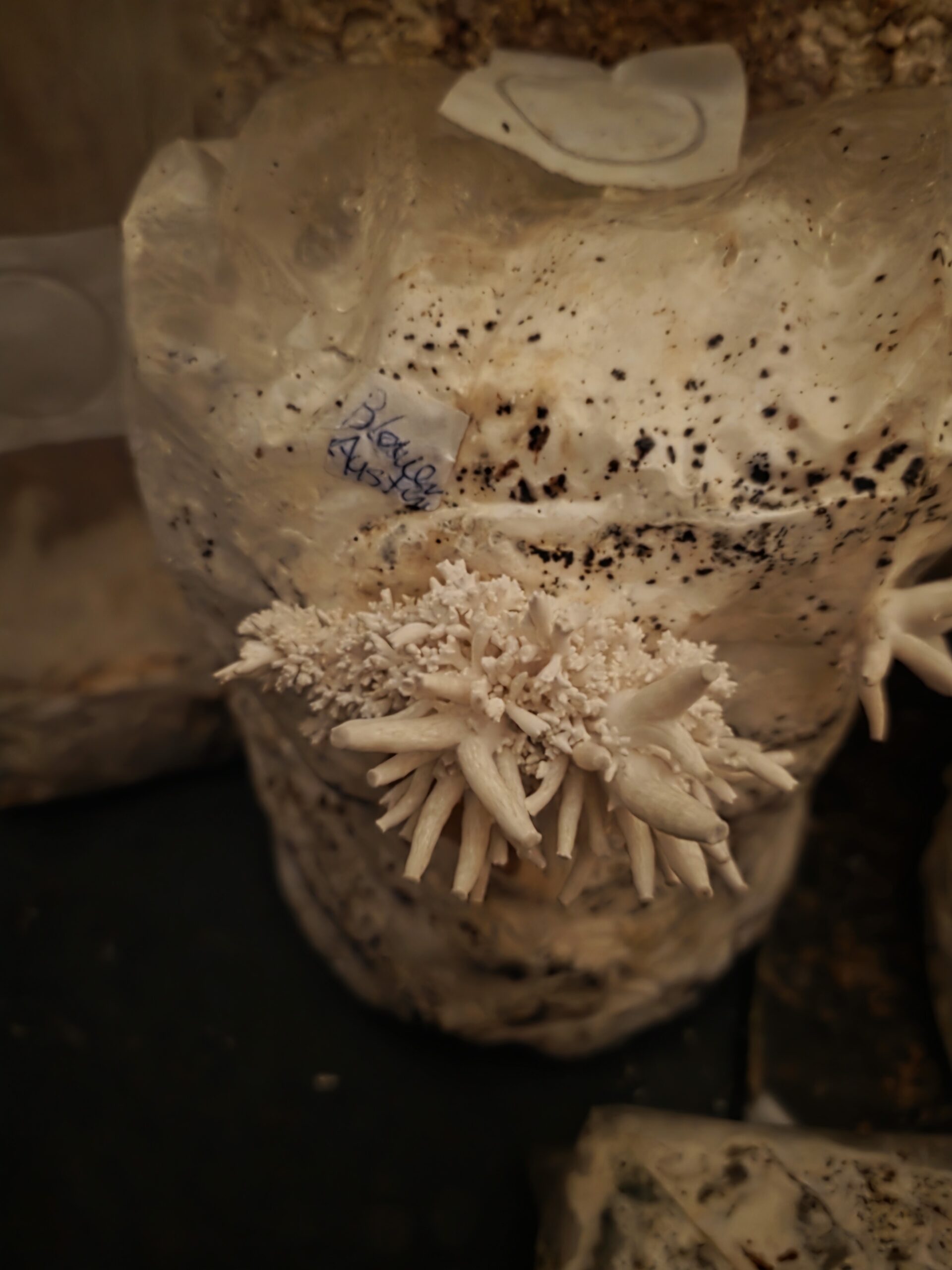
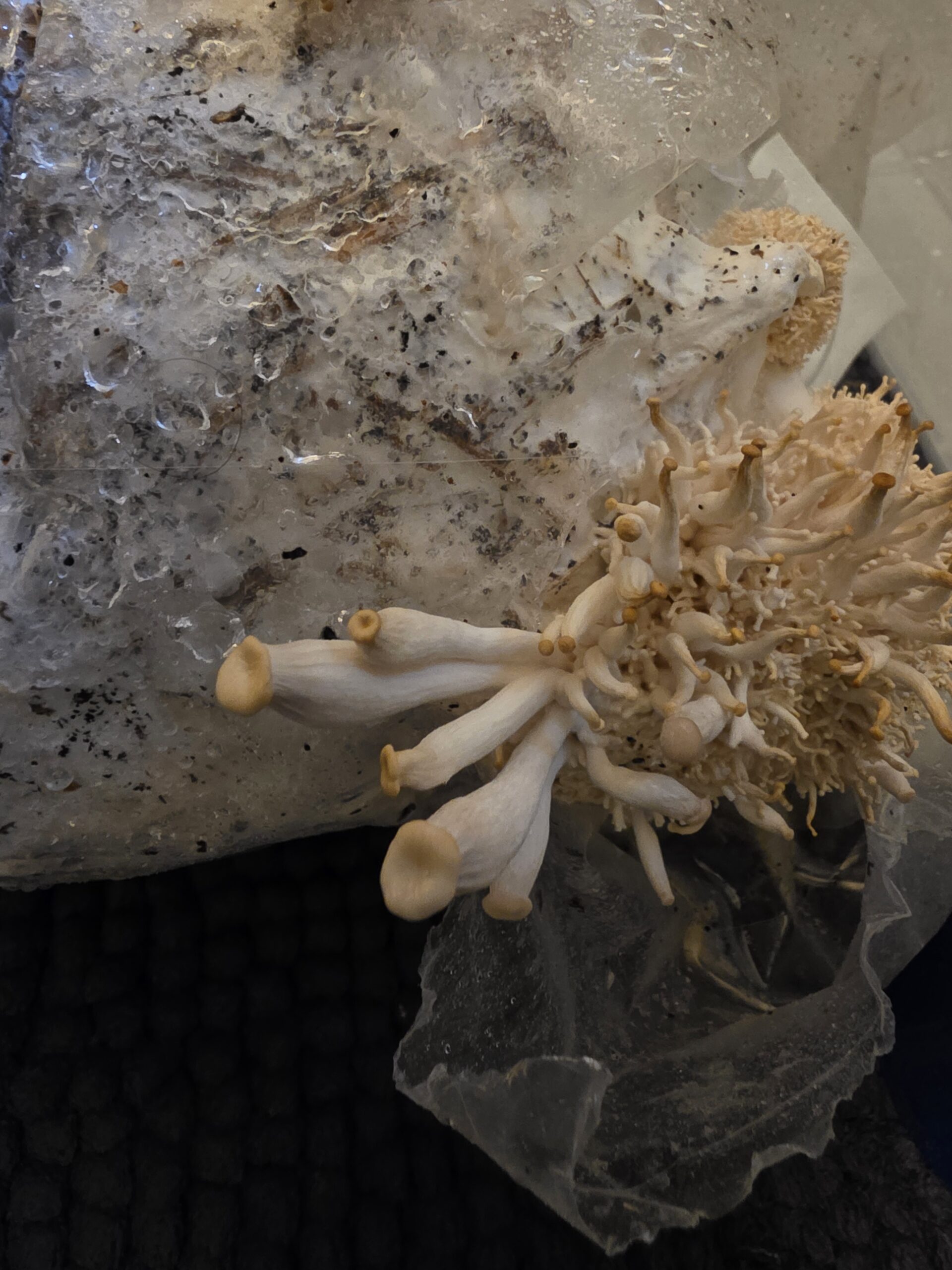
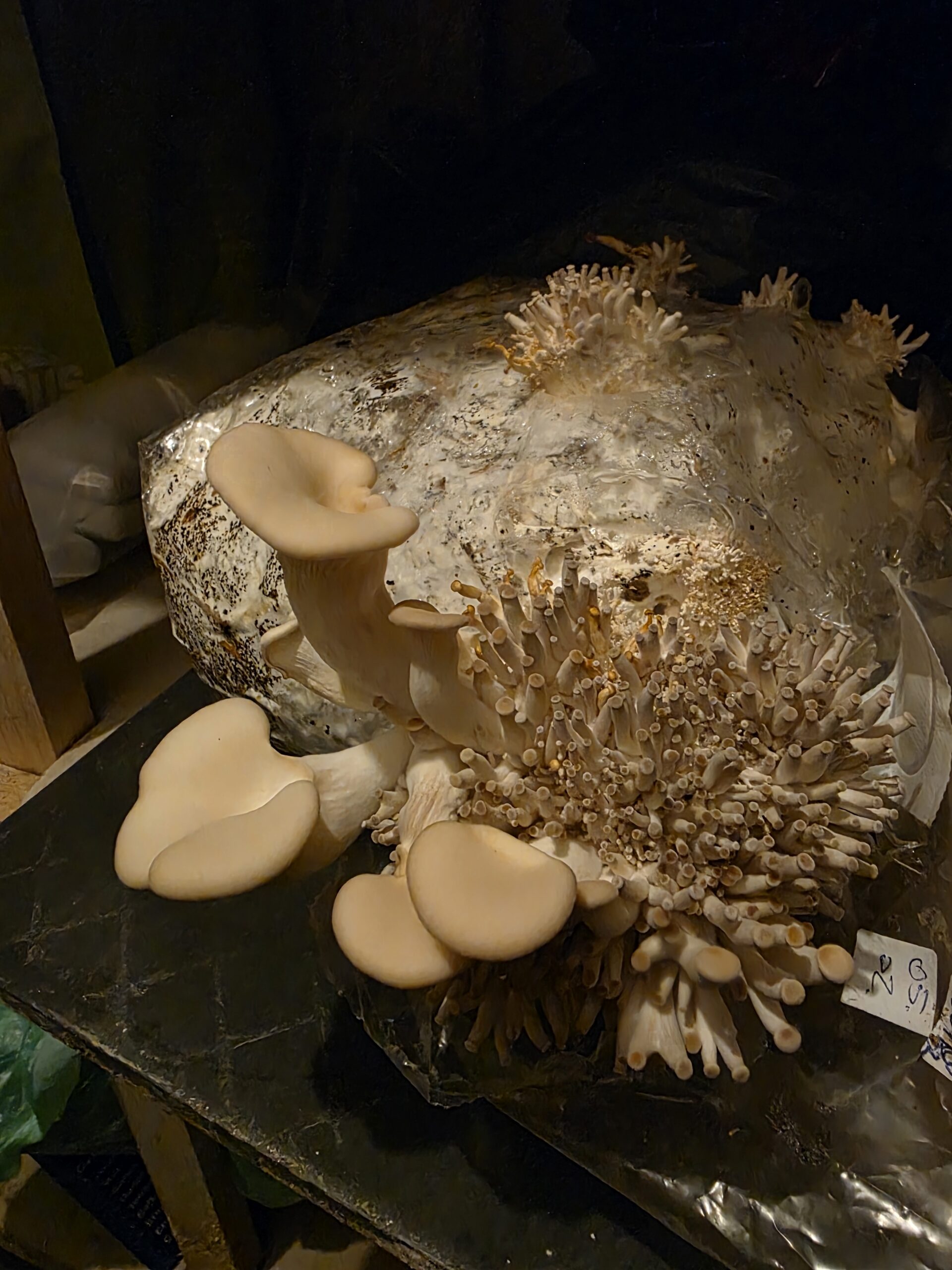
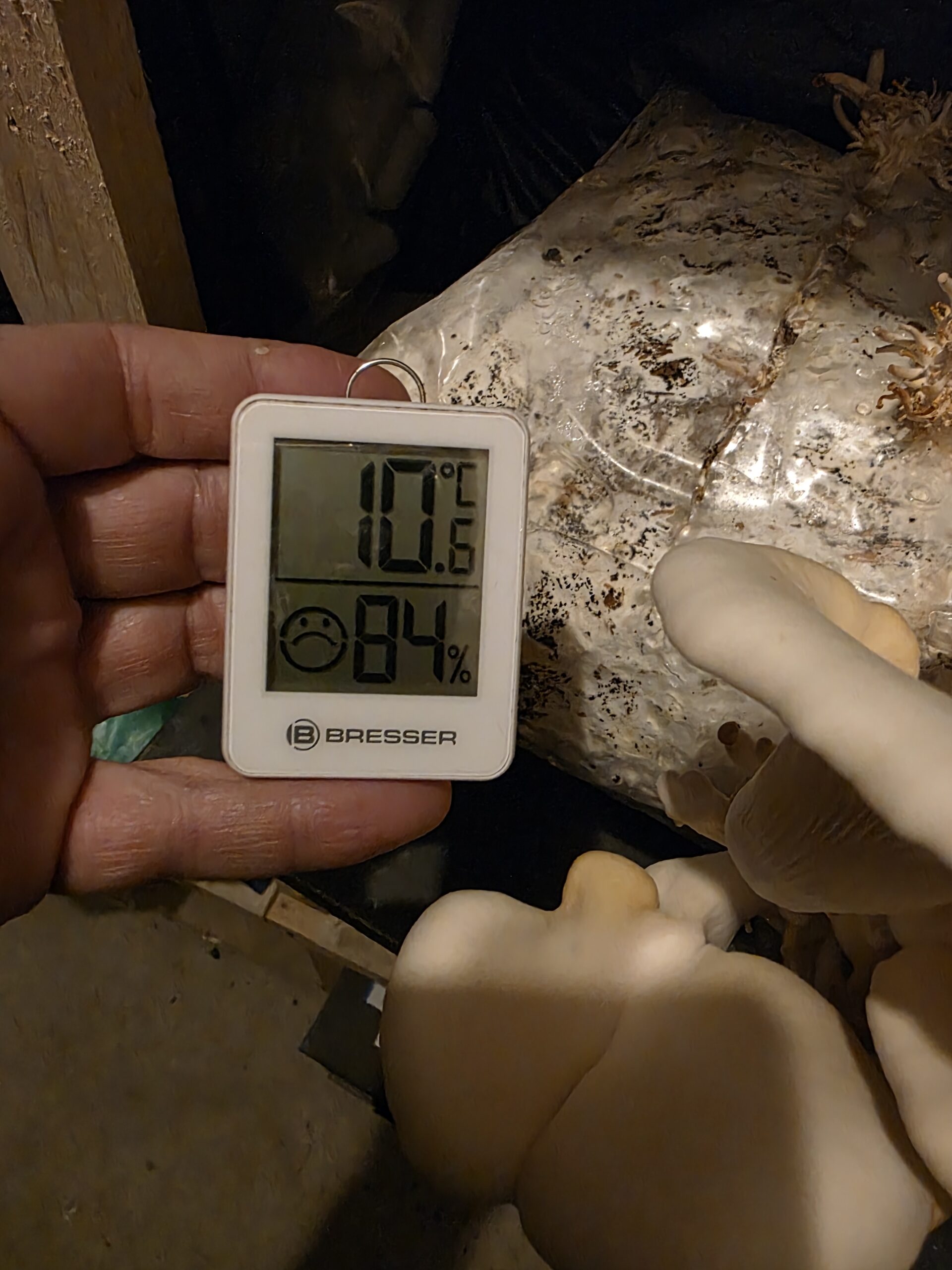
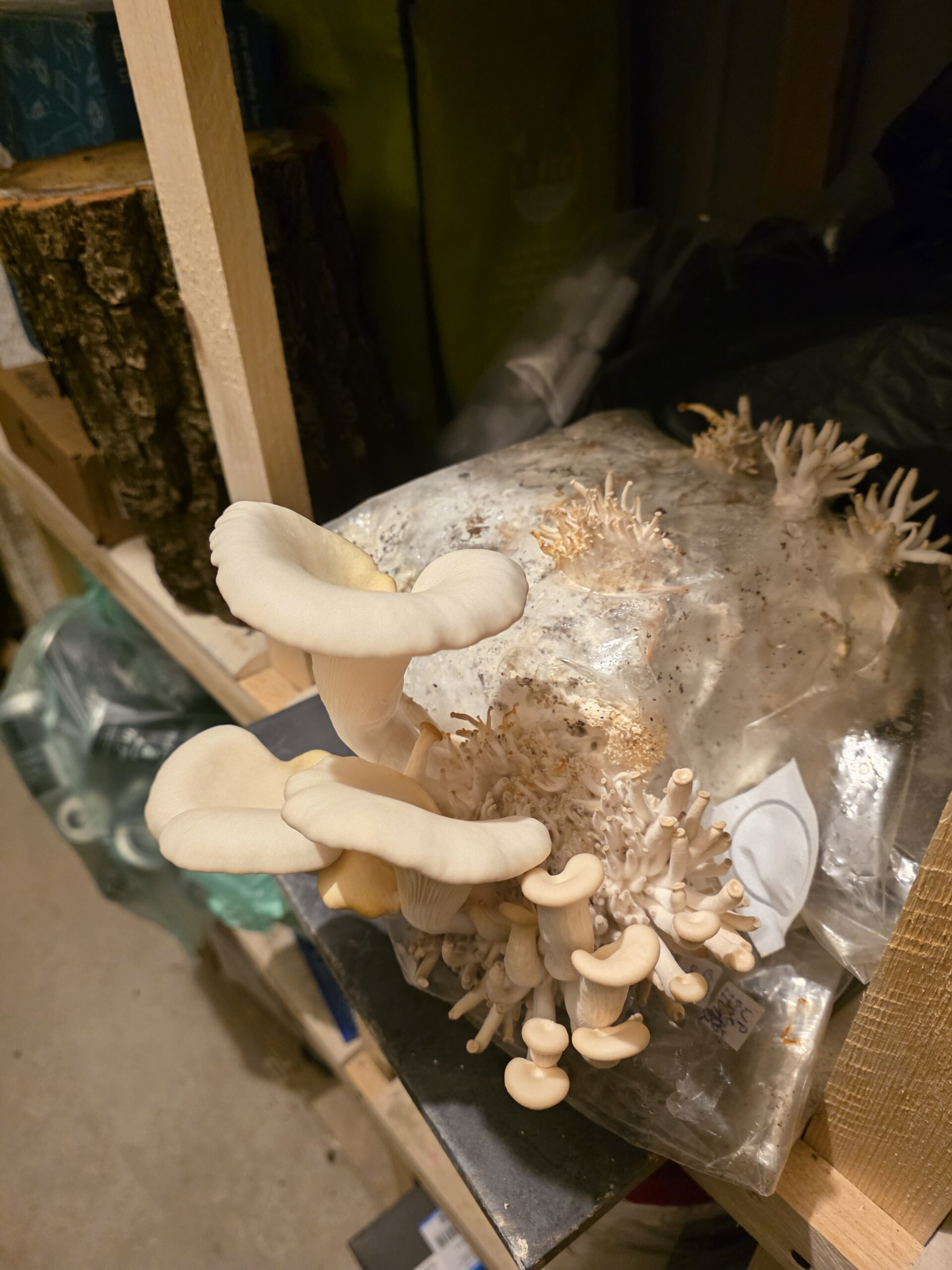
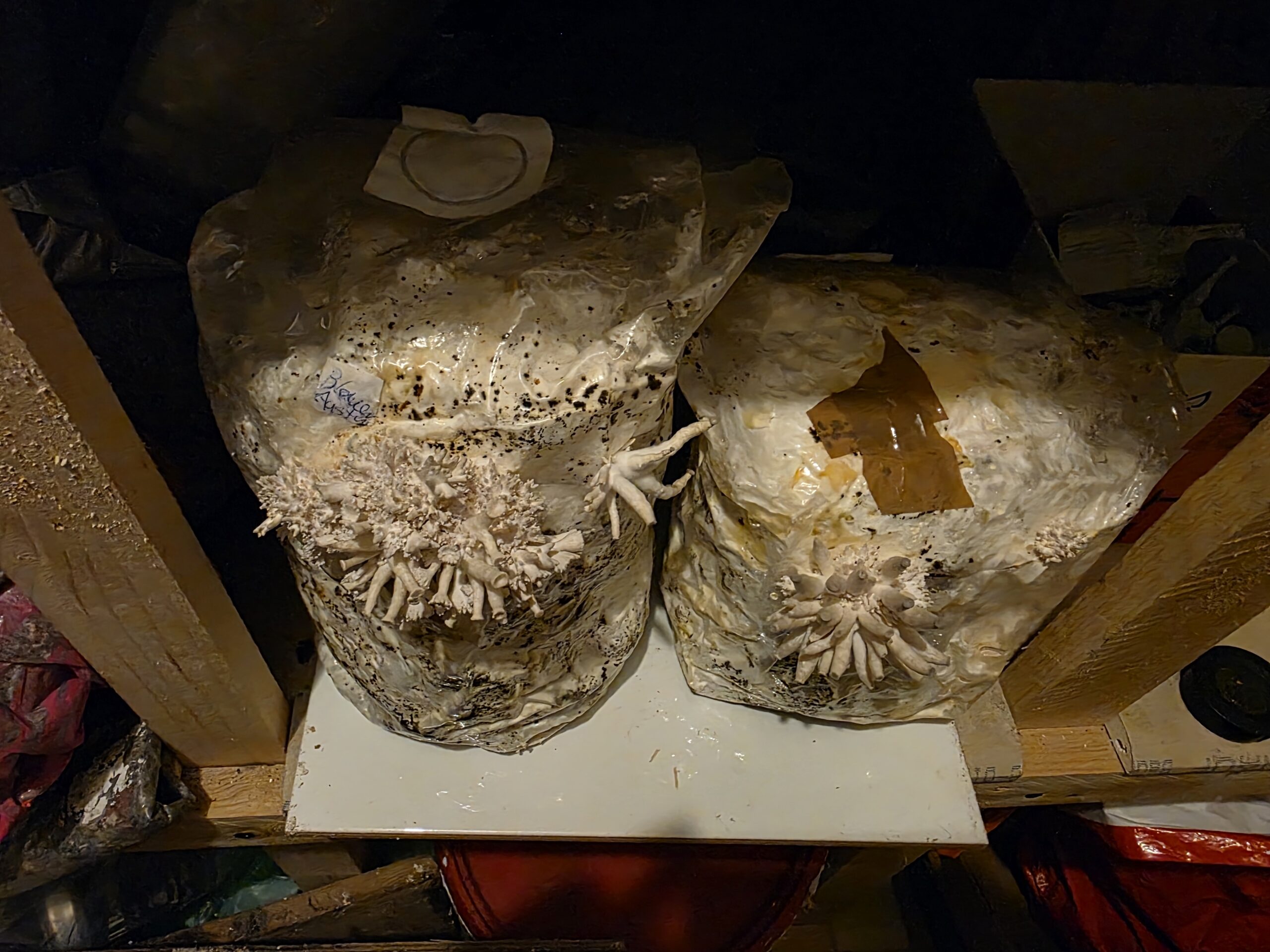
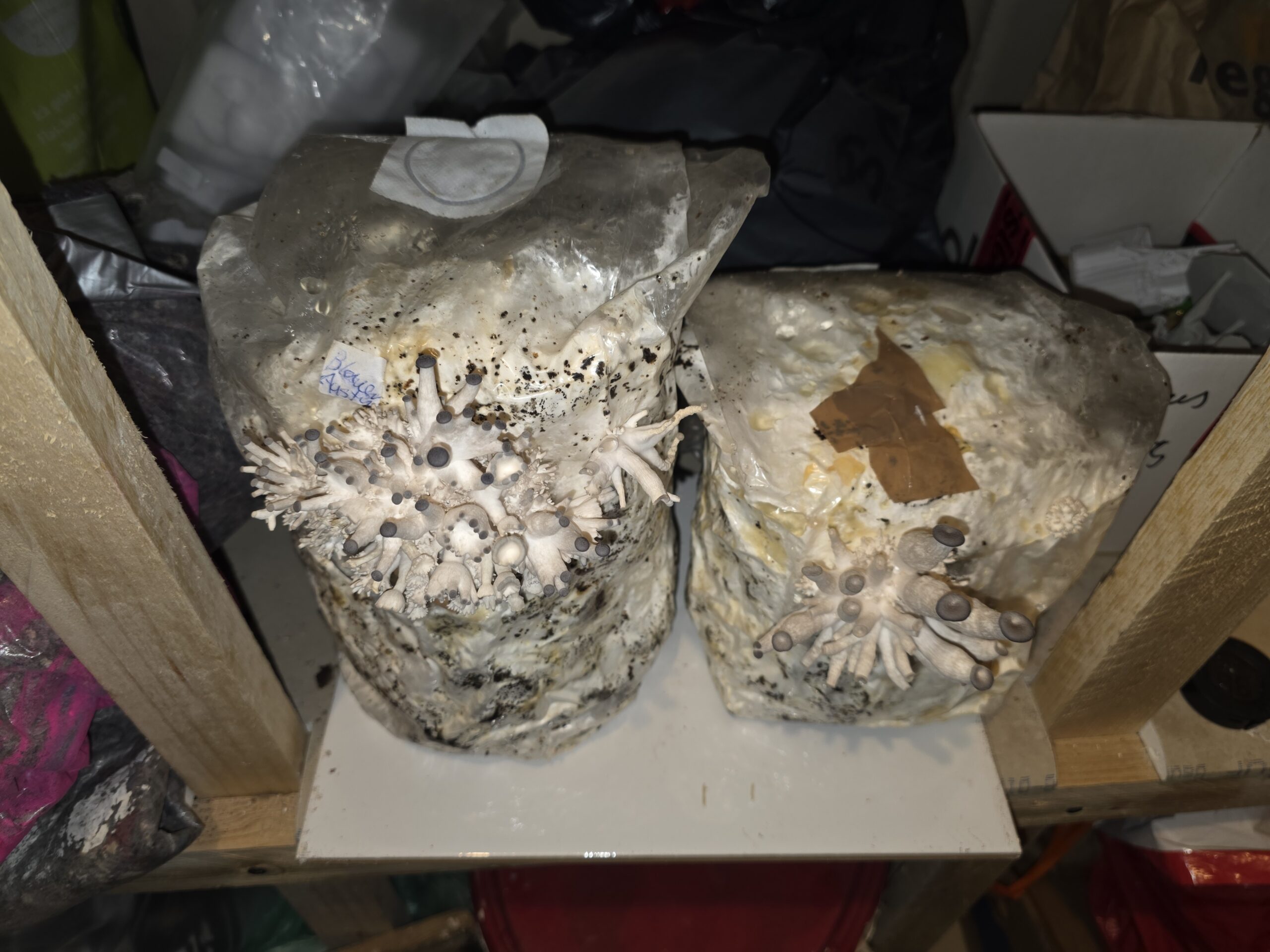
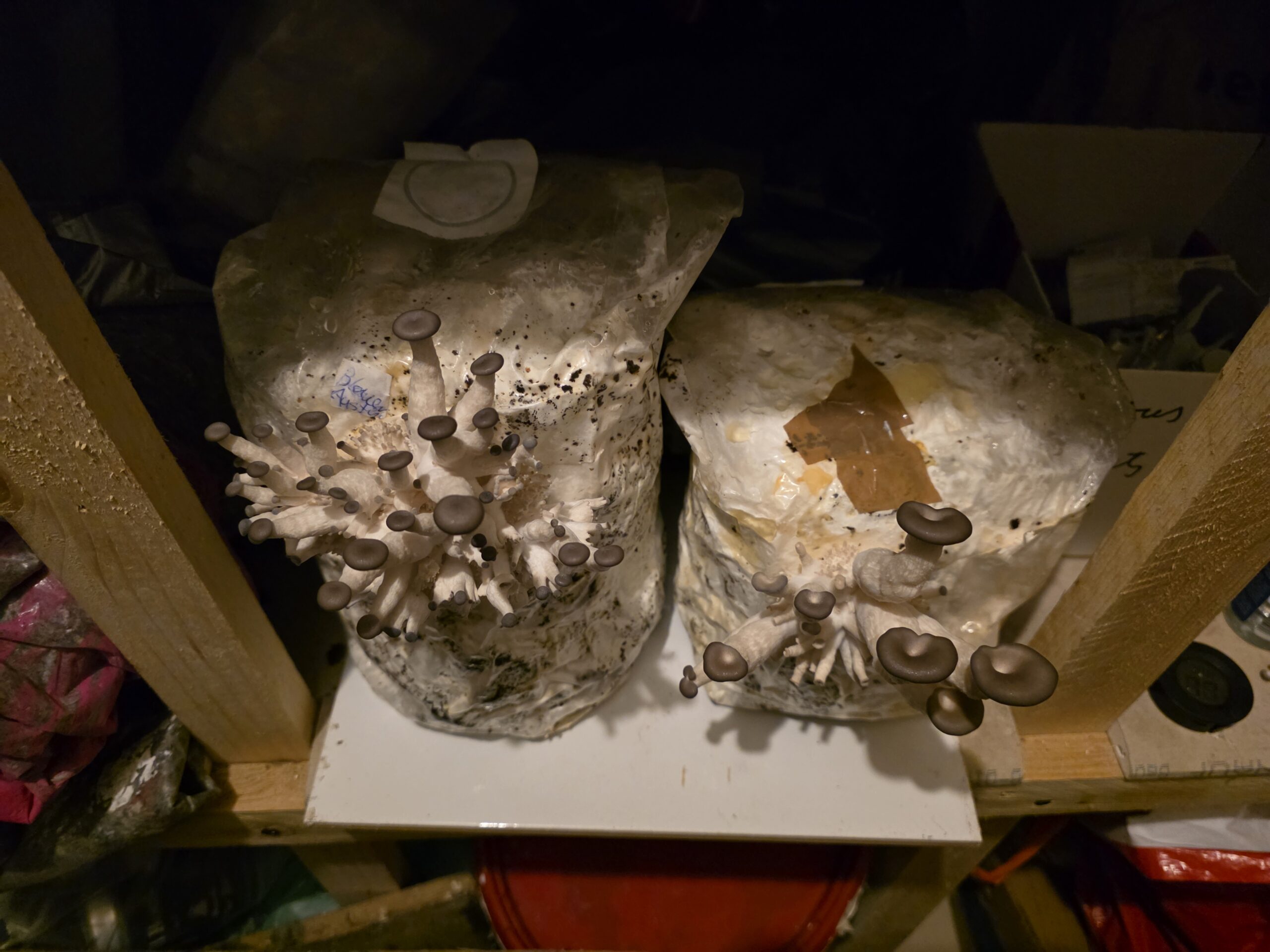
For fruiting, I move it down into the basement. In the corner where the damp spot is, the humidity reaches around 95%, with temperatures of about 10°C in winter and 18°C in summer. These conditions are almost much perfect for fruiting oyster mushrooms.
My main learning so far:
As it is often the case in life, you have to find the right moment to stop.
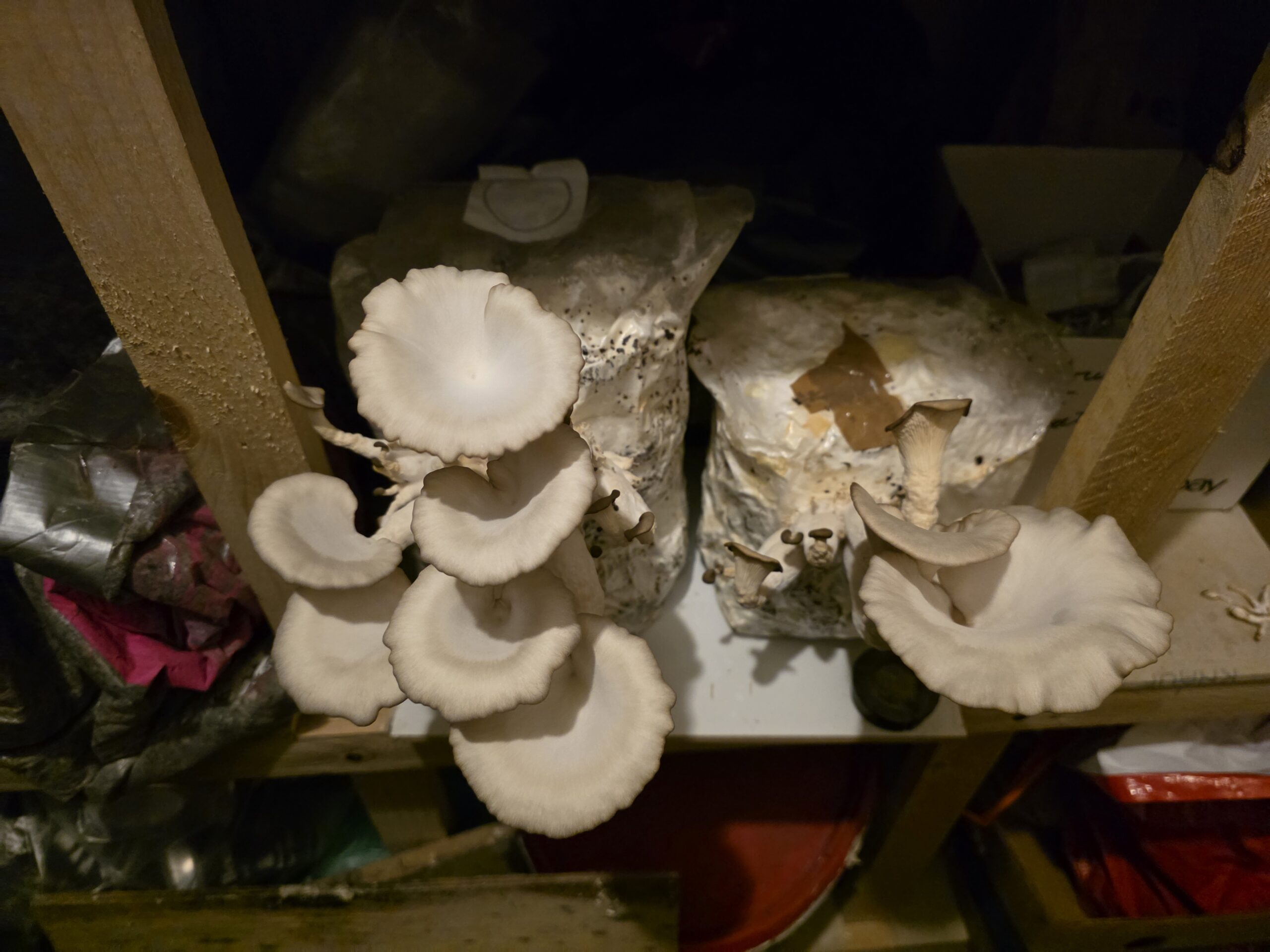
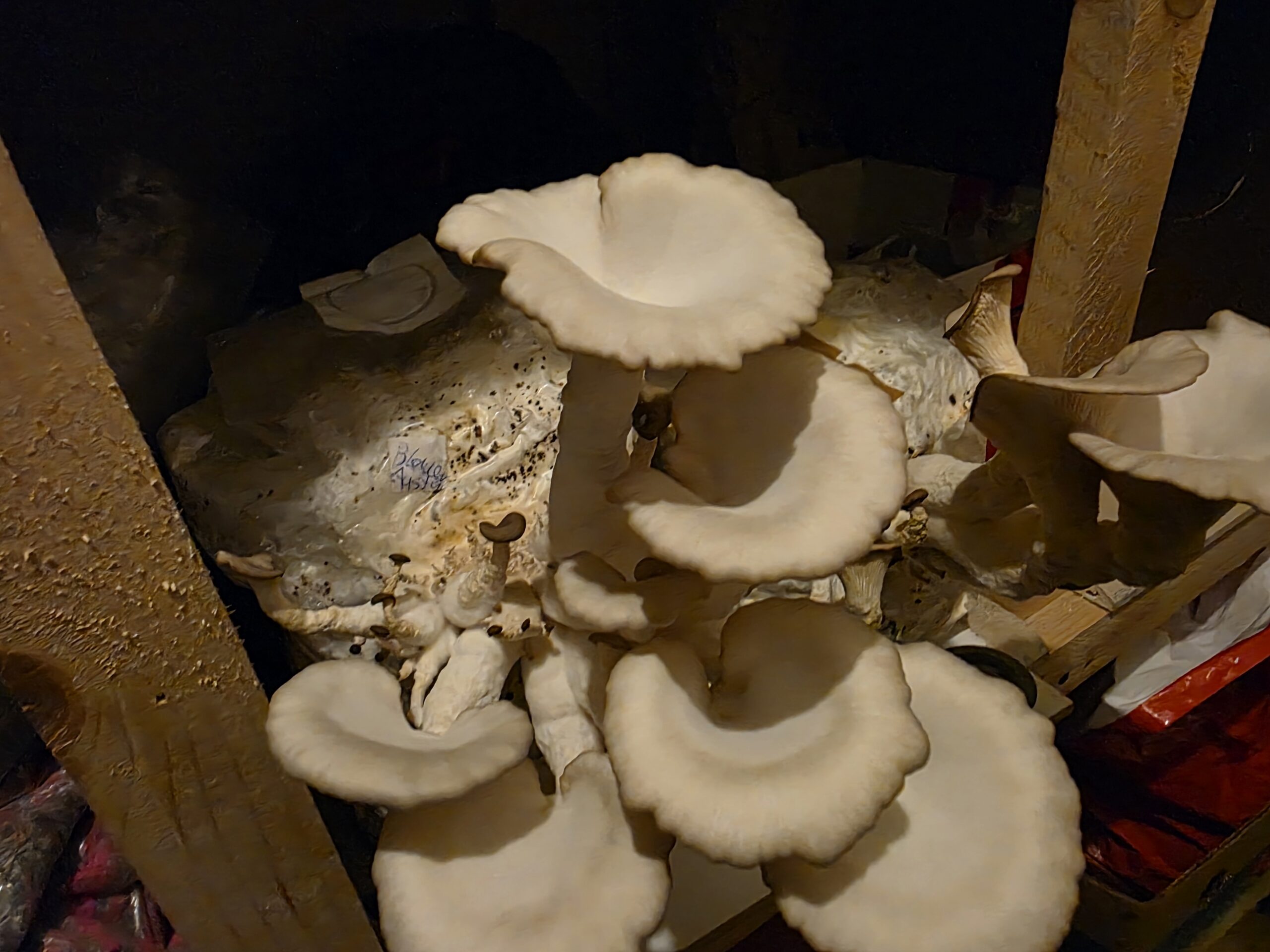
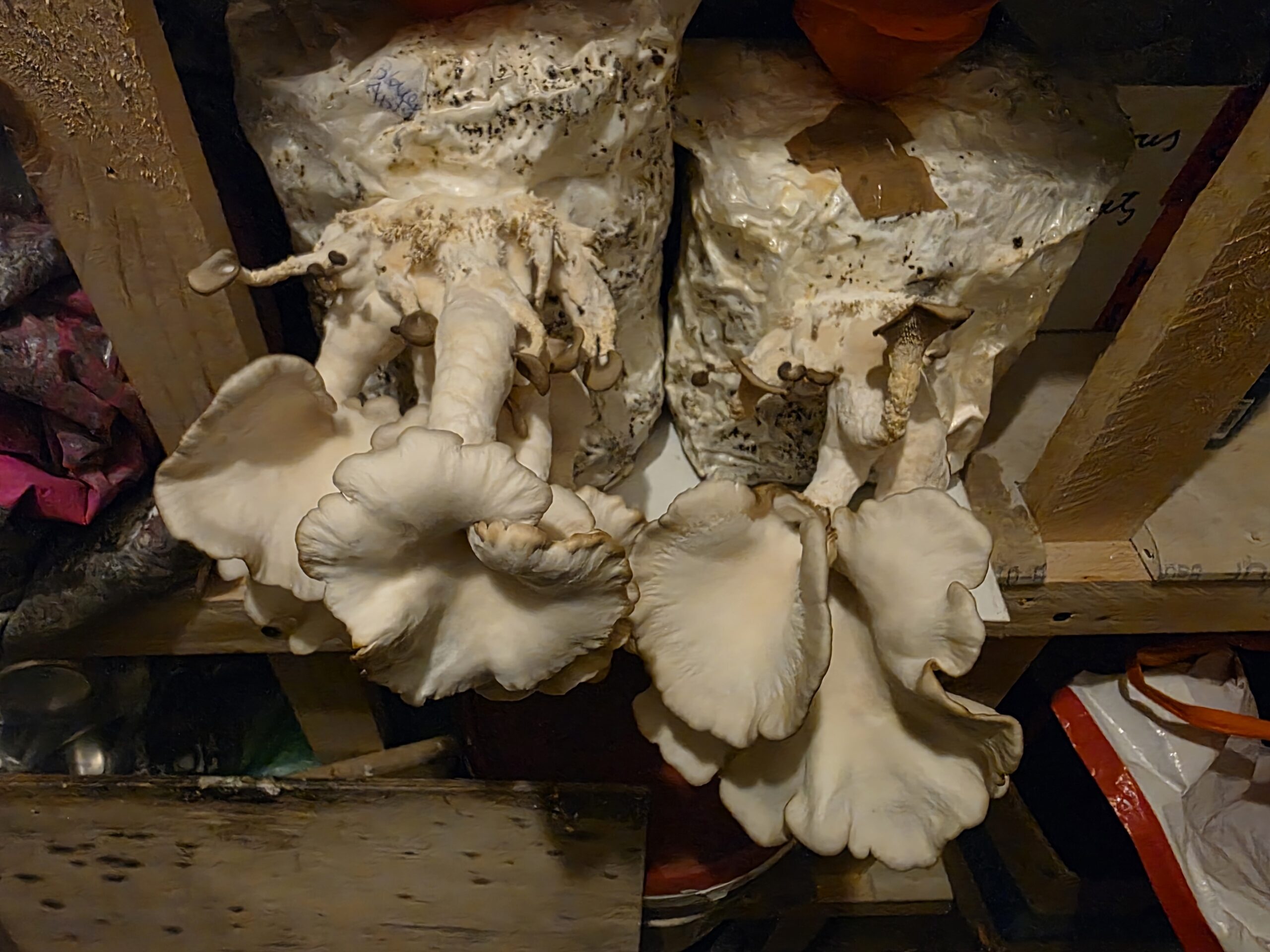
As you can see in the second flush of the Blue Oyster mushrooms, they were already a little bit too old. That’s why the caps had started to crumble slightly, and they had lost their beautiful shape.
The second flush also shows that the conditions are not quite 100% perfect. They’re supposed to be Blue Oyster mushrooms, but they look very white. Why? Because the mycelium was still growing so vigorously that it started growing over the fruiting bodies, which is why they turned white.
It’s not mold—it’s simply mycelium that’s going a little crazy. I guess it’s probably a bit too humid down there.
It’s a game of trial and error and for me, it proves one thing: I like the mycelium, and it seems that the mycelium likes me too. 😉
As is often the case in life, things start to get really interesting when people begin inspiring each other.
For over a year now, I’ve been passionate about working with mycelium. Then I met my old friend Carlos in Portugal, and he came up with the idea of MBCs—mycelium-based composites. The idea is to create composite materials using mycelium and different substrates, such as agricultural waste, wood chips, or other materials left over from farms or industrial sites.
We decided to join forces, and it all started with a little presentation and workshop I gave him and my business partner. Here is the video:
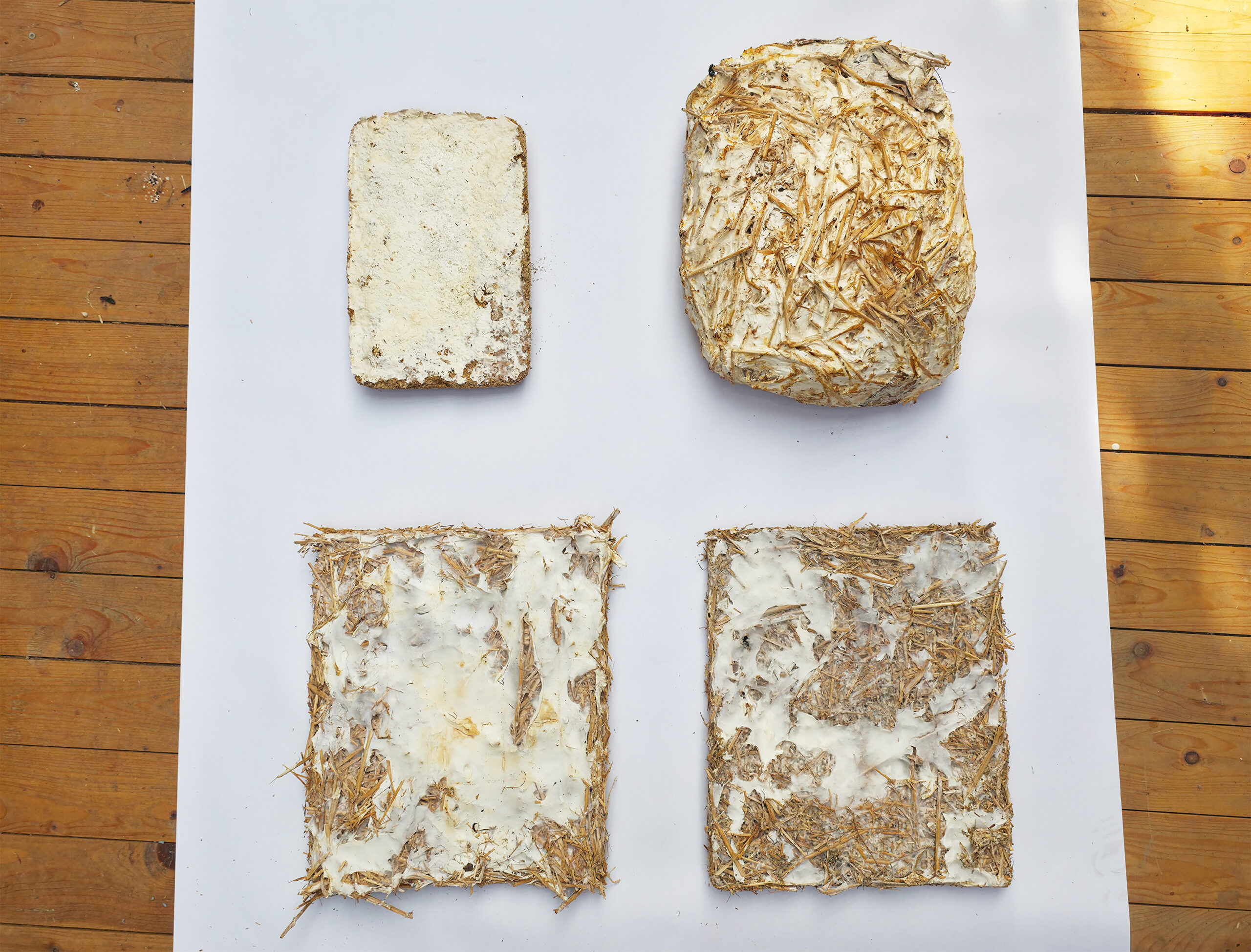
So, at the moment, I’m experimenting with oyster and reishi mycelium and different kinds of substrates. This means shredded straw or other dried plant leftovers, as well as additives like coffee grounds or other more nutrient-rich ingredients to help the mycelium grow faster. Here some pictures of the first MBC-prototypes.




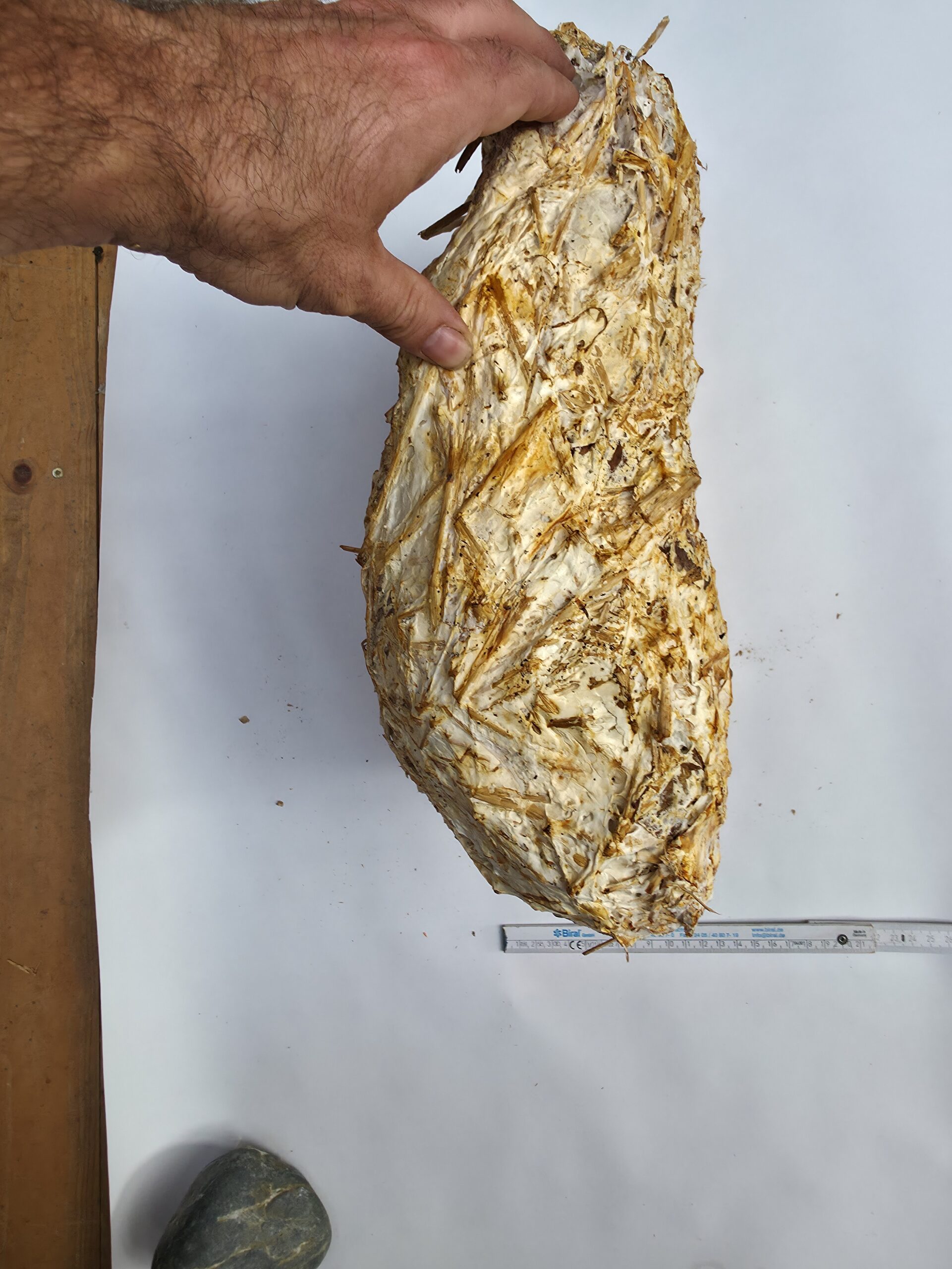
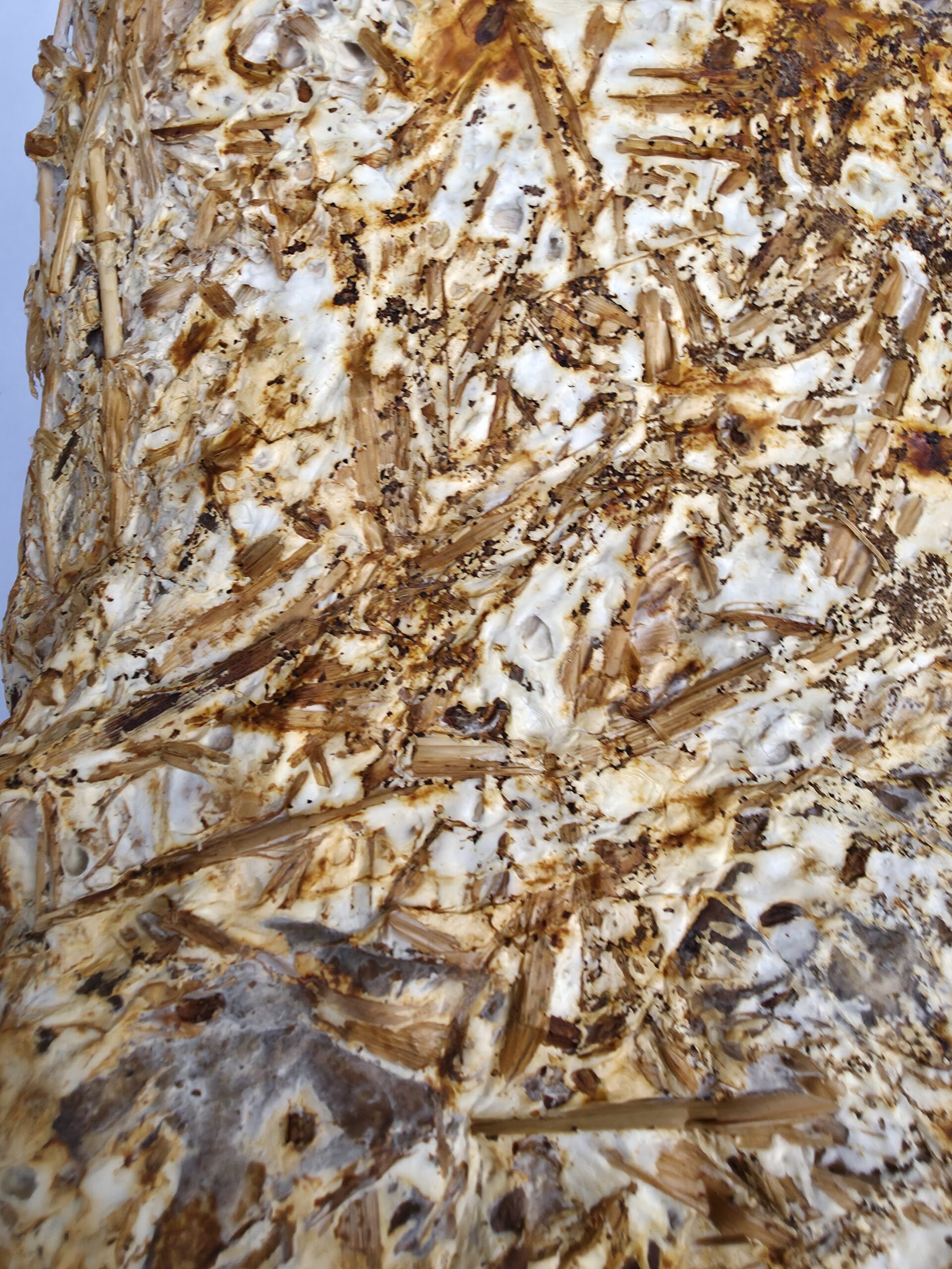
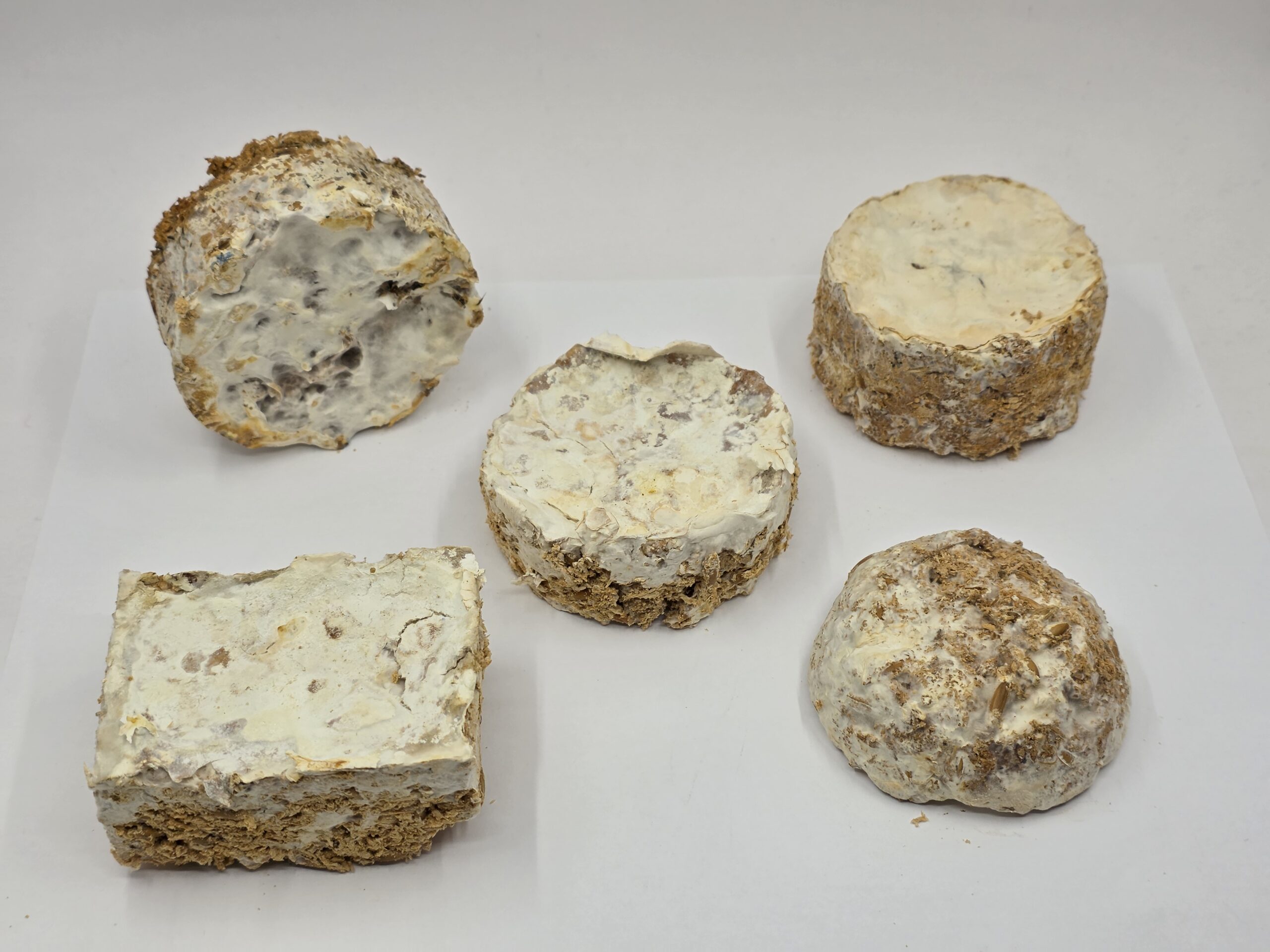
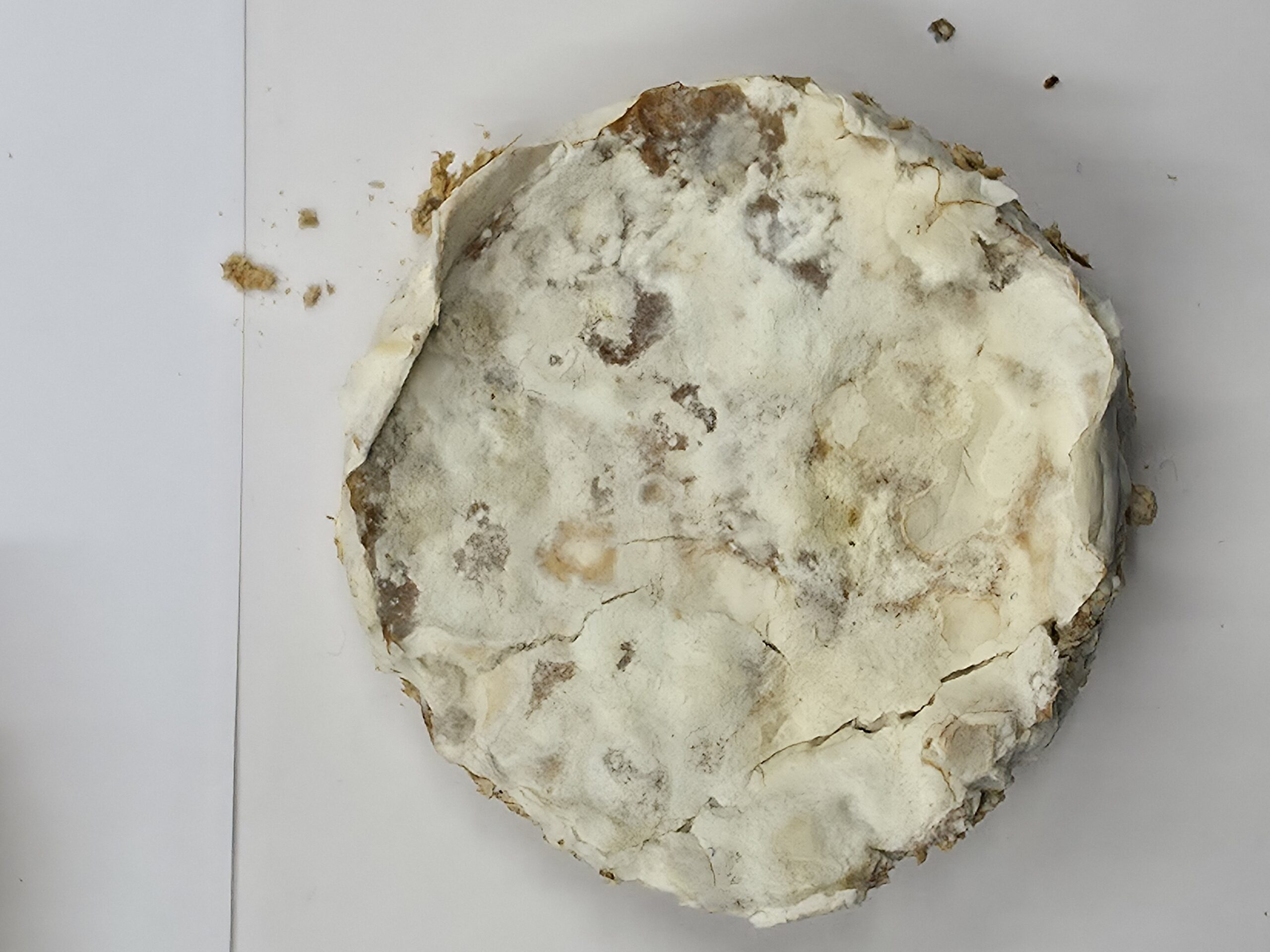
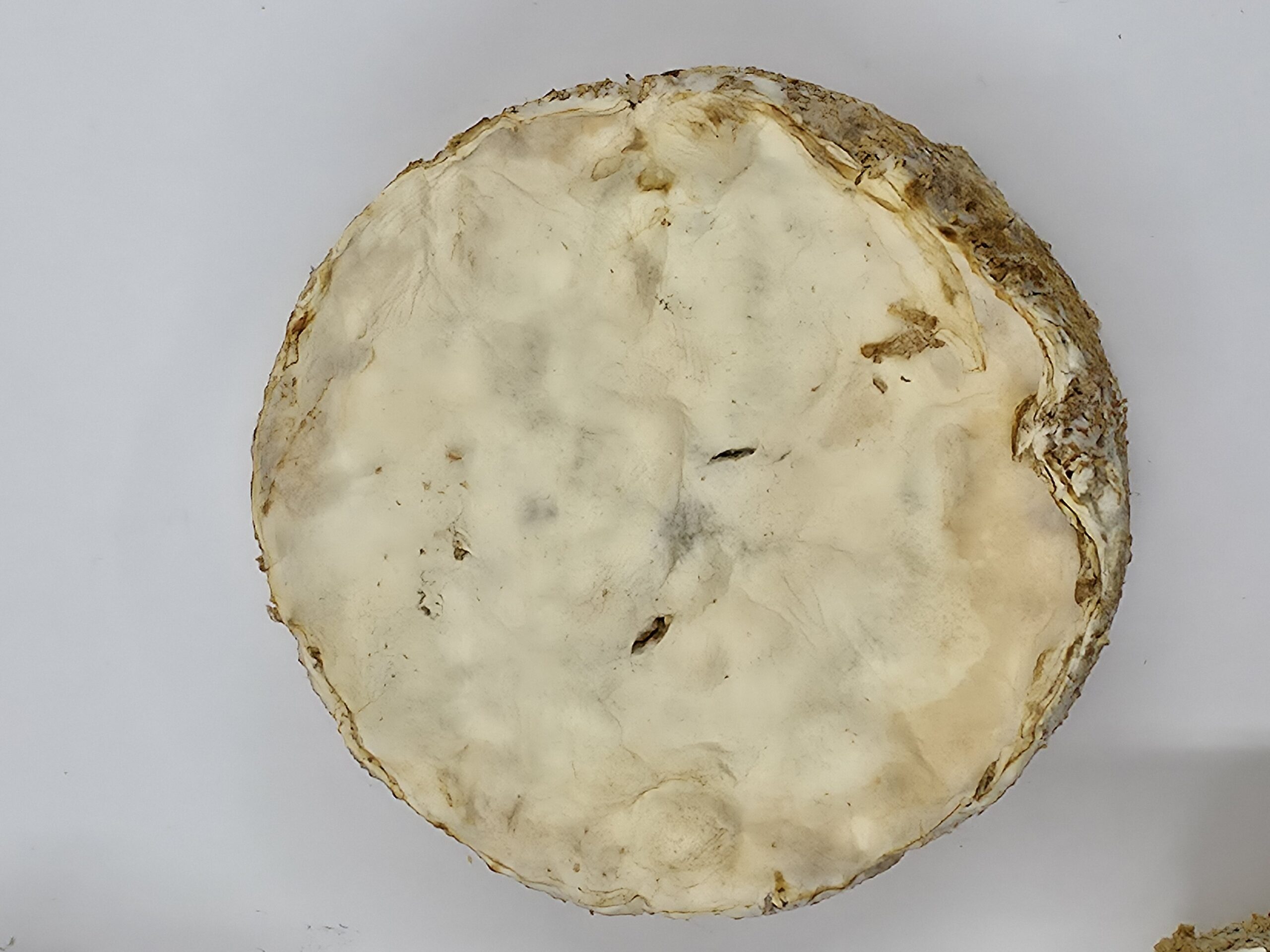
What I’ve learned so far is that proper hygiene when working in the laboratory is key, and the growing temperature is also very important for achieving healthy mycelium growth and avoiding contamination by mold.
Here you can see some of the composite experiments that ended with mold contamination.


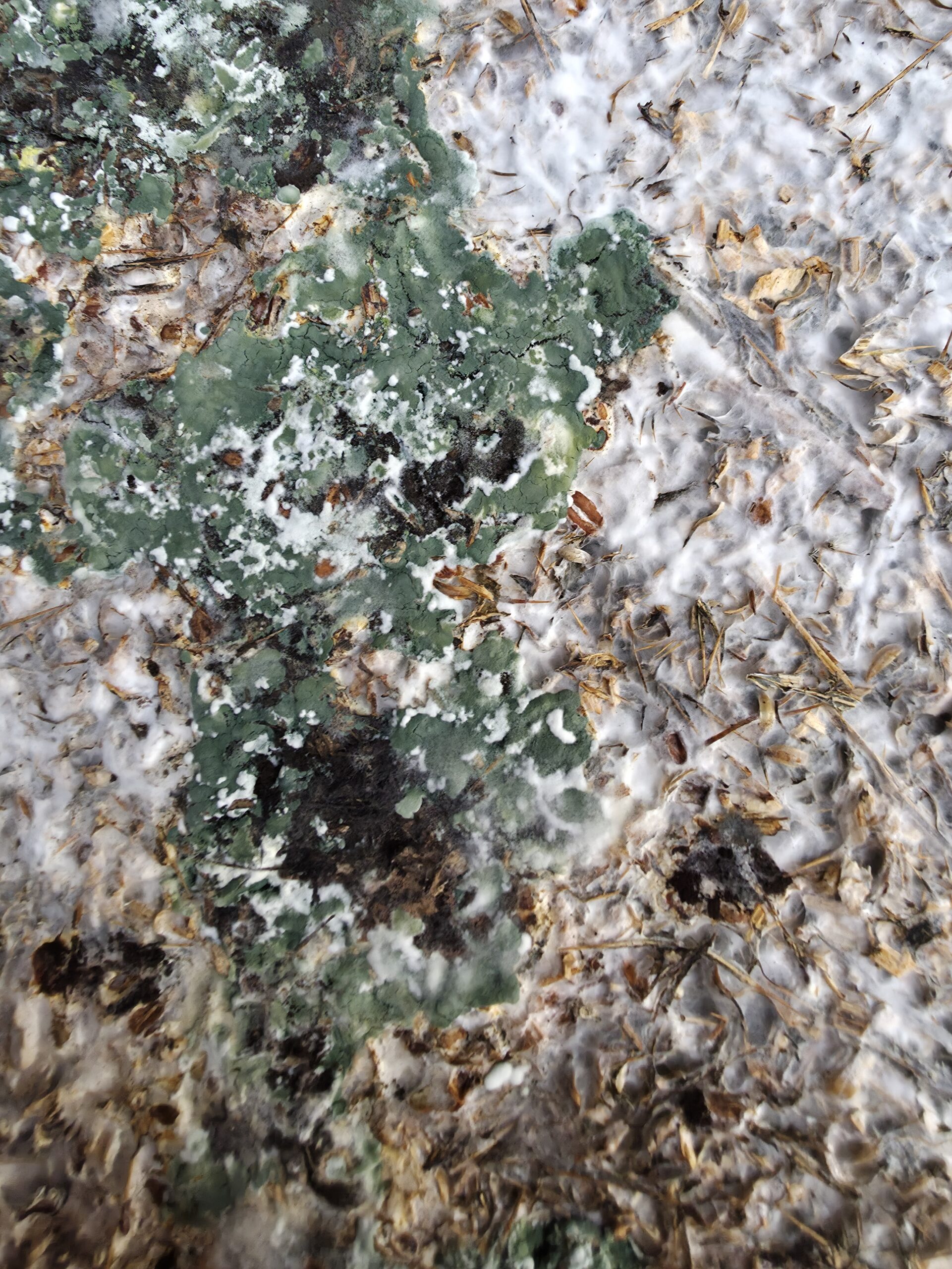
Looking at these results—completely mold-covered mycelium experiments—I think there are two ways to look at it:
The first is to be disgusted and unhappy with the result. It means wasted material and wasted time. But on the other hand, you can also look at it with a certain fascination.
I remember the famous quote by Albert Schweitzer: “I am life that wants to live, surrounded by life that wants to live.”
And when you look at it that way, you can clearly see that it’s simply another organism that has found its way in. You start to learn about these other organisms, which maybe shouldn’t be considered enemies, but rather unwanted guests that you simply don’t want to have in your house.
Here, for example, we have the greenish Trichoderma, a common mold that can also be found on cheese or often in the fridge. And then there’s the other one, which is the classic black mold Aspergillus niger. FYI: This black mold gets very dusty and it’s spores can be harmfull to humans with a weak immune system.
And this brings me to a Japanese word I really like: 育てる(そだてる, sodateru). It means to grow, to nurture, to cultivate. But it a sense of “letting grow”.
And “letting grow” – especialy in Mycology – always means “not letting grow” because when you nurture one form of life, you are also choosing the conditions in which other forms of life may not survive.
To let something grow is never just about giving it space. It is also about creating boundaries. You create the right environment, the right temperature, the right humidity—and by doing so, you invite one form of life in while quietly closing the door to another.
Maybe that is what fascinates me most about cultivation. You are never really in control of life. You can only create the conditions, make a choice, and see what happens.
Certainly I will grow more mushrooms and more MBCs!
And I decided to give my new mycelium-venture a name. For the last 15 years, I never really had a hobby because I turned my hobby into my job. But now I have a hobby again, but to be sincere I have to say that it is more than that: I’ve truly found a new passion in the field of MYCOLOGY.
But I decided to go about it in my own way: With a playful approach and the awareness that I am sometimes disregarding the at times scientifically meticulous, even pedantic methods of the scientific community. Doing it as a hobby in my freetime also means not having to do it for money. More mold? Who cares?
In many respects, it is more like a child at play. And as a child, my nickname was Lolo. So perhaps it isn’t truly serious mycology, but rather “Myko-LoLo-G.”